 Home
HomeDecoding Machine Learning
From "Magic" to Mathematics
Imagine teaching a child to recognize a cat. You don't program definitions of "whiskers" or "fur" into their brain. Instead, you point to a creature and say, "Cat." You do this enough times, and eventually, the child points to a new, never-before-seen animal and correctly identifies it.
This is the essence of Machine Learning (ML). It is the science of getting computers to act without being explicitly programmed.
Whether you are a complete beginner curious about the "magic" behind your Netflix recommendations or a seasoned developer looking to brush up on the fundamentals versus the 2025 landscape, welcome to the realm of ML.
The Foundation: How Machines Actually Learn
At its core, machine learning is about generalization. The goal isn't just to memorize data but to perform well on new, unseen examples.
Think of it like studying for an exam. If you only memorize the practice questions (overfitting), you’ll fail when the wording changes on the real test. A good student (or ML model) learns the underlying concepts to solve problems they've never faced before.
The Three Main Flavors of Learning
We generally categorize learning into three main "flavors":
1. Supervised Learning: The Teacher with an Answer Key
This is the most common type. You give the computer data paired with the correct answer.
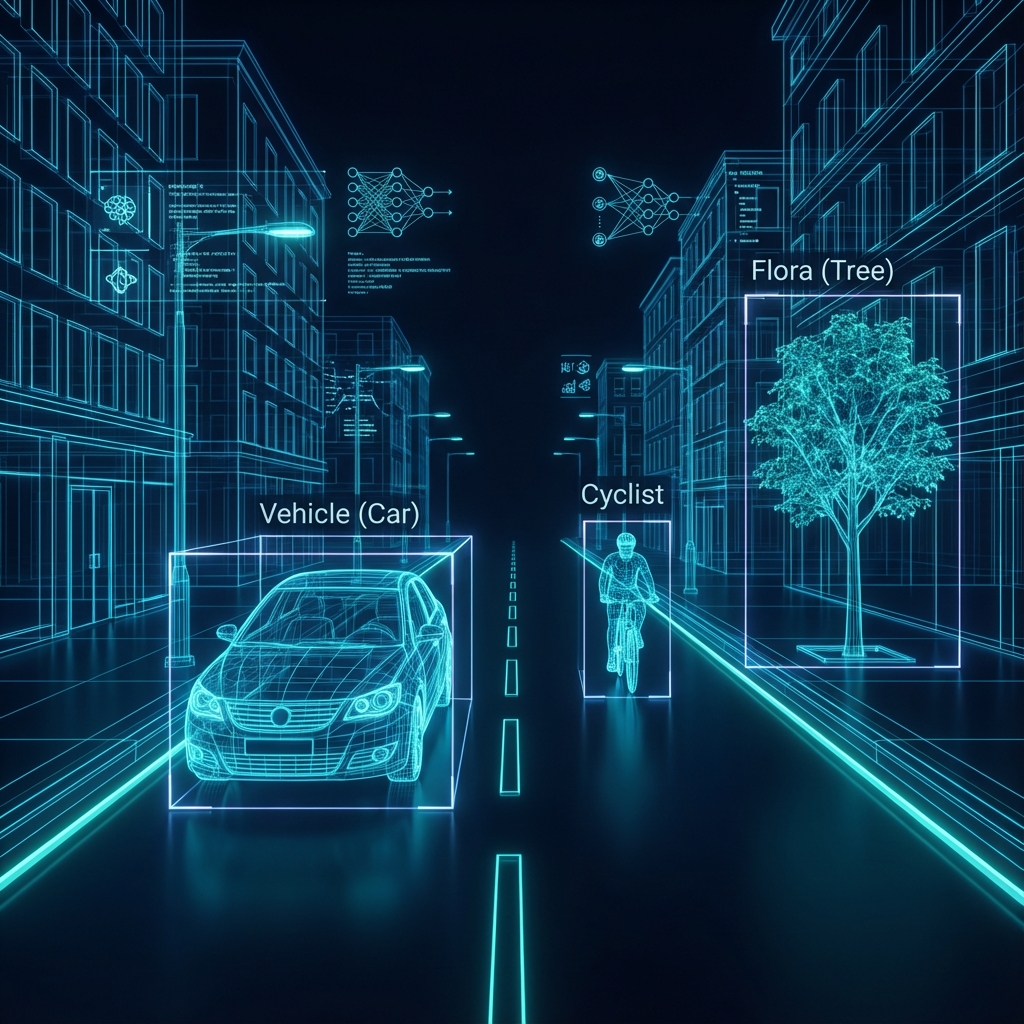
Figure 1: Object detection is a classic Supervised Learning problem.
-
The Analogy: It’s like a piano teacher sitting next to a student. "That was a C sharp, play it again." The student adjusts until they get it right.
-
The Tech: This covers classification (is this email spam or not?) and regression (predicting a house price based on square footage).
2. Unsupervised Learning: Finding Patterns in Chaos
Here, there is no teacher. The computer is given a massive pile of data and asked to find structure.
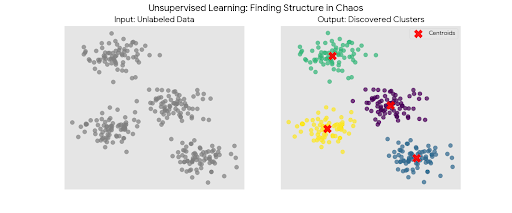
Figure 2: Clustering algorithms find hidden structures in unlabeled data.
-
The Analogy: Imagine being dropped in a foreign library where you don't speak the language. You can't read the titles, but you can still organize books by color, size, or symbol. You’re clustering similar items together without knowing what they are.
-
The Tech: This includes clustering and density estimation. It's how Amazon suggests "people who bought this also bought that."
3. Reinforcement Learning: The Treat Method
The model learns by trial and error, receiving a "reward" for good actions and a "penalty" for bad ones.
-
The Analogy: Training a dog. Sit? Treat. Bark at the mailman? No treat.
-
The Tech: This is the logic behind self-driving cars and robots navigating physical spaces.
The 2025 Landscape: Beyond the Basics
While the mathematical fundamentals remain the bedrock of the field, the application of ML has exploded. We are no longer just classifying emails; we are building digital agents.
Here is what is defining the realm of ML right now:
- Agentic AI: We are moving beyond chatbots that just talk. The big trend for 2025 is "Agentic AI": systems that can actively plan, reason, and execute complex workflows without human hand-holding. Think of it not as a tool you use, but as an intern you hire.
- Multimodal Models: Early ML was good at one thing: text OR images. Modern models act like human senses, processing text, audio, video, and code simultaneously. This is why your phone can now "see" a landmark in a photo and tell you its history.
- Edge AI: Privacy and speed are becoming paramount. Instead of sending your data to a massive server farm, "Edge AI" processes information right on your device (your phone or laptop). It’s faster and keeps your secrets safe.
Summary
Machine learning is shifting from a novelty to a utility. It is becoming the electricity that powers our digital lives: invisible, essential, and everywhere. Whether you are building the models or just living in the world they create, we are all pioneers in this new realm.